

What are the Shackleford Banks Wild Horses?
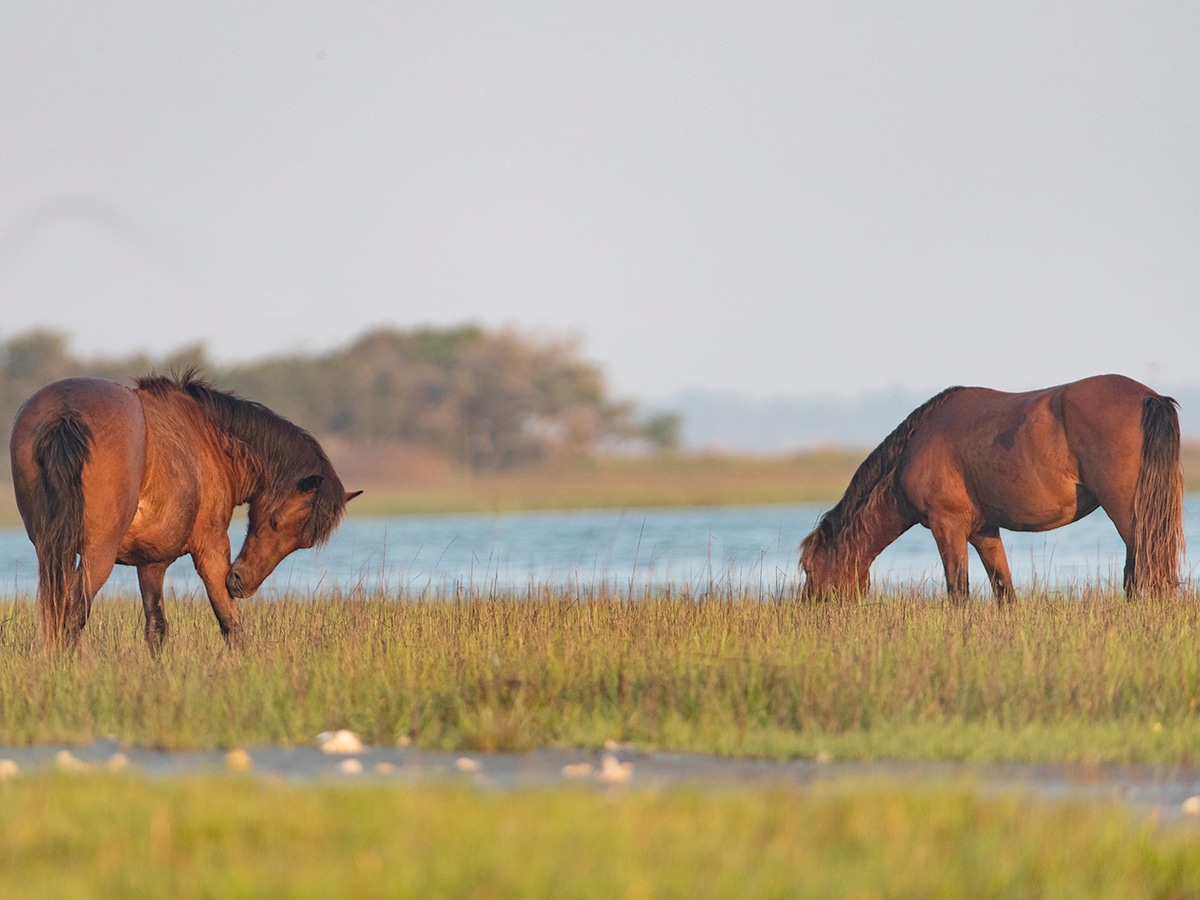
The wild horses of Shackleford Banks are descendants of Spanish mustangs, with genetic roots tracing back to Spain and Portugal. These aren’t your typical wild horses. Protected and managed by the National Park Service, the herd has become a living laboratory for scientists studying how horses adapt to coastal environments over generations. What makes them truly special is their home. Unlike the wild horses in Corolla on the Outer Banks, which share parts of the beach with vehicles and visitors, the Shackleford horses roam a completely uninhabited barrier island. There are no roads, no buildings, no permanent human presence. It’s just the horses, the dunes, the maritime forest, and the ever-changing tides. This untouched setting gives you a rare glimpse of what life was like along the Carolina coast centuries ago.How Did Wild Horses Get to Shackleford Banks?
The story goes that Spanish horses swam ashore from a shipwreck back in the 1500s. It’s a romantic tale that’s been passed down for generations, and while historians can’t confirm the exact details, the evidence is compelling. The horses do carry Spanish DNA, and shipwrecks were common along this treacherous stretch of coast during the age of exploration. But that might not be the whole story. Early European settlers brought horses with them to the New World and bred them along the barrier islands. Historical records also mention Chickasaw Indians riding horses in the region. What we know for certain is this: the herd has called Shackleford Banks home for centuries. Over that time, they’ve transformed from domestic horses into truly wild animals, perfectly adapted to surviving on sea oats, marsh grasses, and whatever freshwater they can find. They’ve learned to weather hurricanes, find shelter in maritime forests, and thrive in an environment that would challenge most horse breeds. That survival story is just as fascinating as any shipwreck legend.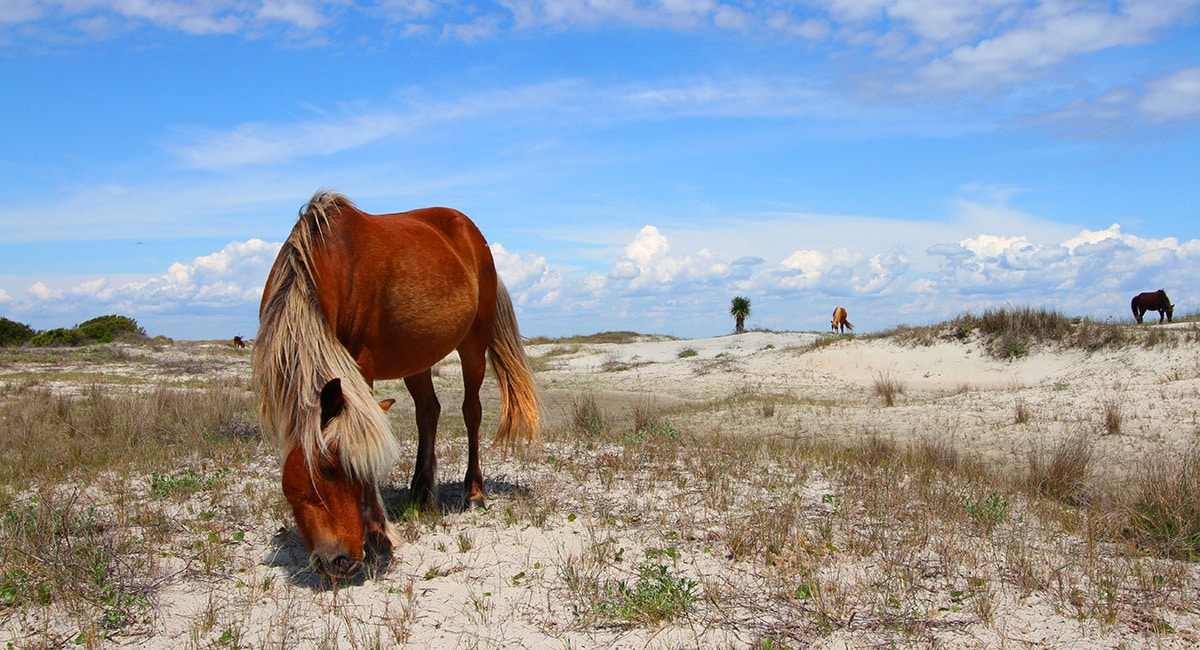
How Many Wild Horses Live on Shackleford Banks Today?
The herd on Shackleford Banks numbers between 110 and 130 horses at any given time. That might sound like a lot, but it’s actually carefully managed to keep the island’s ecosystem in balance. Since the horses live on National Park land, Cape Lookout National Seashore teams up with the Foundation for Shackleford Horses to keep an eye on the population. Every horse is tracked individually, with detailed records kept on births, deaths, family groups, and genetics. It’s a level of care that ensures these horses will continue roaming Shackleford Banks for generations to come.When is the Best Time to See Wild Horses on Shackleford Banks?
If you’re planning a trip specifically to see the horses, spring and fall offer the best conditions. The weather is mild, the crowds are thinner than in summer, and the horses are active. May, September, and early October are particularly lovely times to visit if you want warm weather without the peak season hustle. While you can spot horses any time of day, your best bet is early morning or late afternoon when they’re most active. Summer brings its own charm as the horses travel in family groups and spend time near the shoreline to stay cool. In winter, they retreat into the dunes for shelter from the coastal winds, which can make them a bit trickier to find but no less beautiful to observe.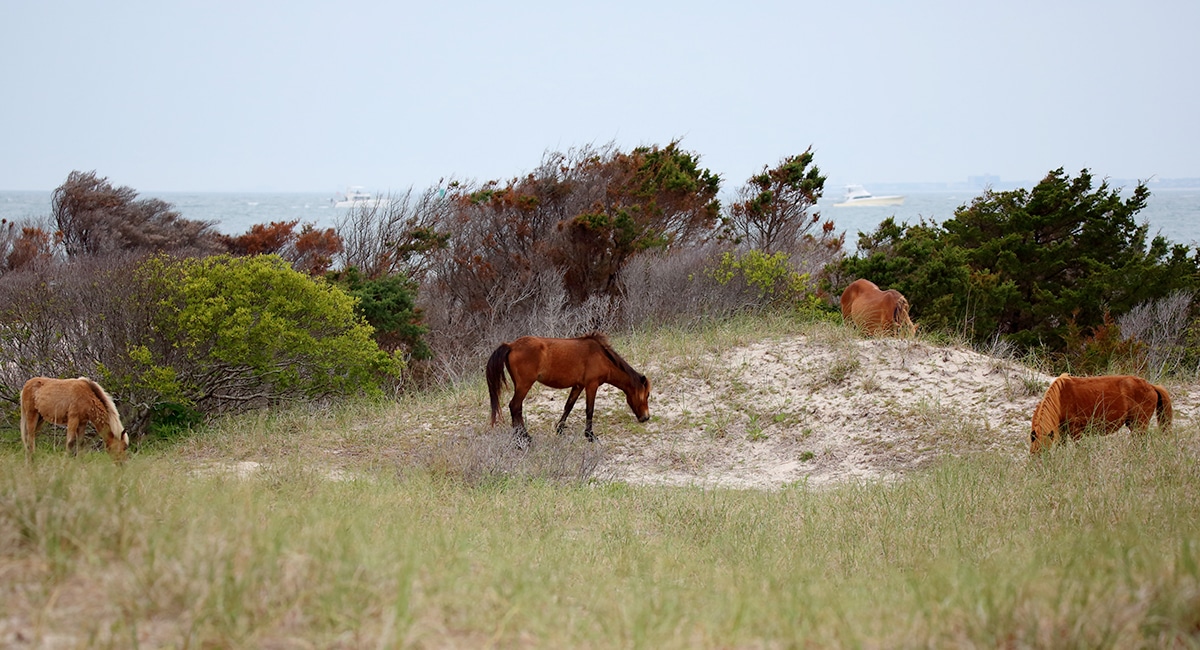
How Do Wild Horses Survive on Shackleford Banks?
Life on a barrier island isn’t easy, but these horses have figured it out over centuries of adaptation. Their diet consists almost entirely of native grasses like centipede grass, smooth cordgrass, saltmeadow cordgrass, and sea oats. Because these plants aren’t particularly nutrient-rich, the horses spend much of their day grazing, eating between 1.5% and 2.5% of their body weight daily just to maintain their health. Water comes from freshwater ponds scattered across the island, along with rainwater and moisture from the plants they eat. It’s a testament to their resilience that they thrive on resources most domesticated horses wouldn’t find adequate. The horses organize themselves into two types of groups: harems and bachelor bands. Harems consist of a stallion, his mares, and their foals, usually led by a dominant mare with the stallion bringing up the rear for protection. Bachelor bands are made up of young stallions who haven’t yet established their own harems. You might see stallions striking or kicking at rivals who venture too close to their families. With no natural predators on the island, the horses’ biggest threats come from major storms and disease. It’s a relatively peaceful existence, all things considered, which is part of what makes watching them so special.How Do You Get to Shackleford Banks to See Wild Horses?
Getting to Shackleford Banks is part of the adventure. Since it’s an uninhabited barrier island, you’ll need to travel by water. Here are your options:Passenger ferry from Beaufort
Island Express Ferry Service is the only ferry authorized by the National Park Service to drop passengers directly on Shackleford Banks. Ferries run from April through November, operating from 7:30 a.m. to 8:30 p.m., with departures from both Harkers Island and Beaufort. The ride takes about 25 minutes each way and typically costs between $24 and $32 per person. Because this is such a popular excursion, especially during spring and summer, reservations are strongly recommended. Book as far in advance as you can to secure your spot.Private boat access
If you have access to a private boat, you can make your own way to Shackleford Banks. Just be prepared for strong tides and currents that can make navigation and anchoring challenging. The surrounding sounds average only about five feet deep, and at low tide, some areas become completely impassable. Public boat ramps are available in Emerald Isle, Morehead City, Beaufort, Strait’s Landing, Oyster Creek, Salters Creek, and Cedar Island. Once you’re within Cape Lookout National Seashore, you can use Cod’s Creek dock and Portsmouth Village dock free of charge.Guided wild horse tours
For a more immersive experience with expert commentary, consider booking a guided wild horse cruise. These tours handle all the logistics while providing fascinating insights into the horses’ history and behavior. Here are some popular options:- Shackleford Wild Horse and Shelling Safari: Your guide will lead you in search of the horses while sharing stories and facts about their history and habits. As a bonus, you’ll also visit one of the Crystal Coast’s best shelling beaches.
- Lookout Cruises: This tour combines two Crystal Coast favorites in one outing. You’ll watch for dolphins in open water before heading to shore for wild horse sightings, all led by a knowledgeable crew.
- Crystal Coast Ecotours: Cruise along Shackleford Banks’ 10 miles of pristine beaches, with strategic stops at locations where horses are frequently spotted.
- Captain Rons: Enjoy a relaxing 2-hour boat tour aboard the Wanderer and cruise down Taylors Creek to take in the historic Beaufort waterfront and the wild horses on Rachel Carson Reserve and Carrot Island.

What Are the Rules for Viewing Wild horses on Shackleford Banks?
The Shackleford Banks horses are protected by federal law, which means breaking these rules can result in serious fines. More importantly, following these guidelines keeps both you and the horses safe:- Keep your distance: Stay at least 50 feet away from the horses at all times. If a horse stares directly at you, stop moving and don’t get any closer. If a horse moves toward you, slowly back away. Remember: on Shackleford Banks, horses always have the right of way.
- Never feed or touch the horses: While the horses may seem gentle, they’re wild animals who don’t appreciate people in their personal space. Their digestive systems are adapted to native island vegetation, so human food can actually make them sick.
- Keep pets on a leash: The horses may perceive dogs and other pets as threats and could react defensively to protect their family groups.
What Should You Bring to See the Shackleford Banks Horses?
For a safe, comfortable visit, here’s what to pack:- Water bottles
- Bug repellent (especially in warm weather)
- Sunscreen
- Sunglasses and/or a sun hat
- Binoculars
- A camera with a good lens or zoom feature
- A bag to carry out your trash and anything you find along the way

Where Else Can You See Wild Horses in North Carolina?
If wild horses capture your imagination, North Carolina offers a couple of other locations worth exploring. The Corolla horses roam the northern Outer Banks, and you might catch occasional glimpses of horses at the Rachel Carson Reserve near Beaufort. That said, Shackleford Banks offers the most reliable and immersive wild horse experience. The herd is larger and easier to spot, and the completely uninhabited setting gives you an authentic glimpse into how these horses have lived for centuries. It’s the difference between seeing animals in their true wild habitat versus catching a lucky sighting. Both have their appeal, but Shackleford Banks delivers something truly special.Planning Your Wild Horse Adventure from Emerald Isle
From Emerald Isle, you’re just 35 minutes from Beaufort, where most Shackleford Banks adventures begin. This makes it easy to work a wild horse excursion into your Crystal Coast vacation without feeling like you’ve spent the whole day traveling. Consider making it a full-day trip by exploring Beaufort’s historic waterfront before or after your ferry ride. The town’s charming shops, galleries, and seafood restaurants are worth the visit on their own. You could also combine your horse-watching adventure with other nearby attractions like the North Carolina Maritime Museum or the Cape Lookout Lighthouse. When you’re planning your Emerald Isle vacation, look for vacation rentals that give you easy access to the area. Properties in Beaufort, Atlantic Beach, and nearby communities like Pine Knoll Shores put you even closer to your starting point for Shackleford Banks adventures.Save it for Later

Frequently Asked Questions
Can you ride the wild horses on Shackleford Banks?
No, and it’s actually illegal to try. The Shackleford Banks horses are wild and may kick, bite, or charge if they feel threatened. Beyond the safety concerns, any human interaction risks domesticating the horses, which would threaten their ability to survive independently. Federal law protects these horses specifically to preserve their wild nature, so touching, feeding, or attempting to ride them is strictly prohibited.
Are the Shackleford Banks horses really wild?
Yes, in every meaningful sense of the word. The horses live completely independently from humans, finding their own food and water, forming their own social structures, and surviving without any human assistance. Technically, they’re considered “feral” because they descend from domesticated horses rather than a never-domesticated wild species, but after centuries on Shackleford Banks, they’re as wild as horses come. The National Park Service protects them as wild animals, and strict rules prevent any human interaction that might threaten their independence.
How long does a wild horse tour take?
Most guided wild horse tours take between 2.5 and 3 hours from start to finish, including ferry time to and from the island. That gives you plenty of time to spot horses, take photos, explore the beach, and soak in the natural beauty without feeling rushed.
What other wildlife can you see on Shackleford Banks?
The horses are the stars of the show, but they’re far from the only wildlife on Shackleford Banks. Keep your eyes on the water for bottlenose dolphins and sea turtles, especially during summer when loggerhead sea turtles nest on the beach. Bird watchers will spot plenty of shorebirds like terns, egrets, black skimmers, herons, and the protected piping plovers. The entire island is a wildlife refuge, so every visit offers surprises beyond the horses.